
Why Your Home Affects You More Than You Think
There’s something I’ve noticed for years as a designer. People will walk into a room in their home and say things like:
“Something just feels off.”
“I can’t relax in here.”
“I don’t know why, but this room stresses me out.”
“I keep trying to fix it, but I can’t figure out what it needs.”
And honestly? Most of the time, they think it’s just about decorating. But more and more neuroscience is showing us that our homes are affecting our nervous systems all day long.
The shapes we surround ourselves with, the amount of visual clutter, the layout of a room, the lighting, the colors, even the spacing between objects… our brains are constantly processing it. As someone who has always felt spaces deeply, this research fascinates me because it validates what I’ve instinctively known for years:
A home is never just a home. It’s something we physically and emotionally experience.
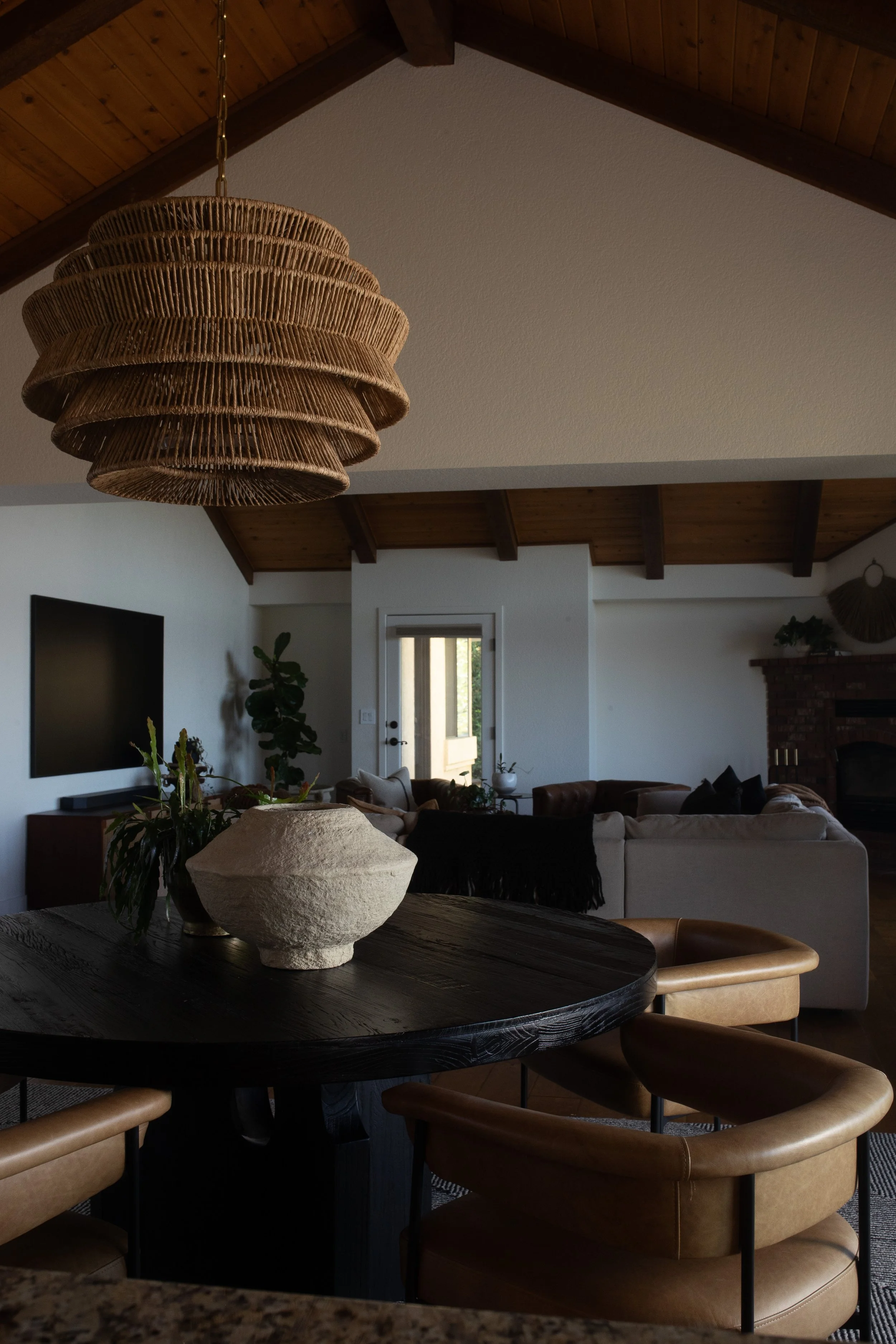
Soft Shapes Create SofterFeelings
One thing researchers are discovering is that humans tend to respond more positively to curves and organic forms than sharp, harsh angles. Rounded furniture and softened shapes can actually help spaces feel calmer and safer to the nervous system.
A curved sofa feels inviting. An arched doorway feels softer. Organic shapes feel more approachable than rigid lines everywhere.
This doesn’t mean your house needs to look overly trendy or overly modern. It just means our brains naturally respond well to flow, softness, and movement. Sometimes simply changing the shape of a coffee table or softening the edges in a room can completely change how the space feels emotionally.
Your Brain Craves Flow
This is why furniture placement matters so much.
Not because there’s one “correct” layout, but because your brain likes rooms that feel easy to move through and easy to understand.
When pathways are blocked…
when furniture is oversized…
when there are too many focal points competing for attention…
…the brain keeps working. Even subconsciously.
I tell clients all the time:
sometimes the answer is not buying more things. Sometimes it’s simply reimagining what you already have. Moving a sofa. Rotating chairs. Changing visual weight. Creating breathing room. It’s amazing how often a room begins to feel peaceful again without buying an entirely new home full of furniture.
Clutter Is More Exhausting Than We Realize
Now, I do not believe homes should feel sterile or overly minimal.
I love layered homes.
Collected homes.
Lived-in homes.
But there’s a difference between a home with soul and a home with too much unresolved visual noise. Our brains are constantly scanning our environment seeing: piles, unfinished projects, and surfaces with no visual rest.
All of it asks the brain to keep processing and that’s exhausting.
Your home should tell your story, without overwhelming your nervous system.
Why People Feel So Deeply About Their Spaces
This part especially resonates with me.
Research around ADHD and sensory processing is showing that some people are much more sensitive to visual environments than others.
They notice:
imbalance
poor spacing
clutter
awkward layouts
visual tension
…almost instantly.
I’ve always joked that I can walk into a room and immediately feel what’s wrong with it. But I don’t think it’s just instinct anymore. I think some of us are deeply sensitive to our environments, and sometimes fixing a space is actually a form of creating calm.
That’s why home matters so much because we spend most of our lives there.
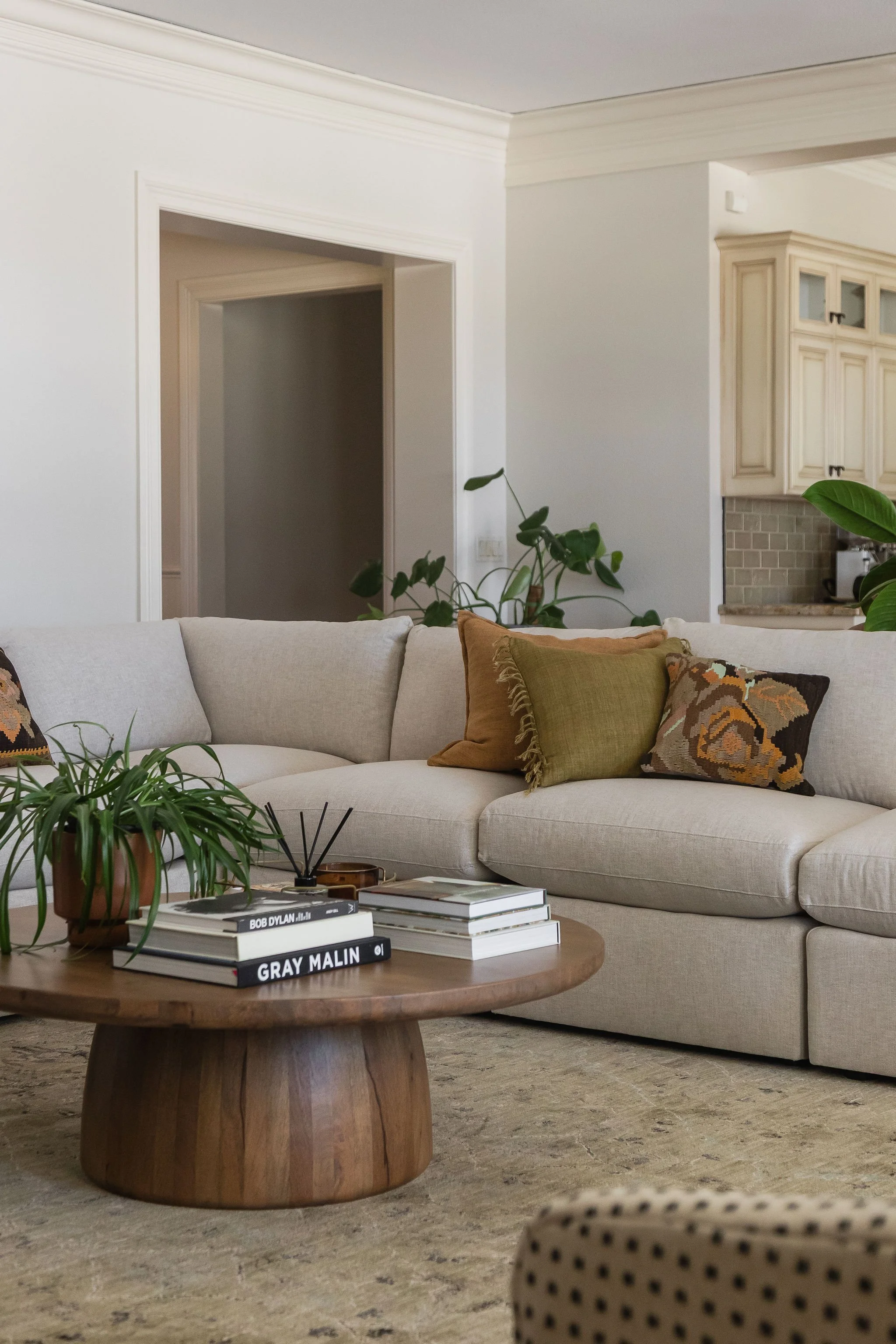
Your Home Should Support You
Your home should not constantly drain you, butt should support you.
And often, creating that feeling has less to do with perfection and more to do with alignment. One thing I think people don’t talk about enough is making sure your furniture actually supports the season of life you’re currently in.
I recently had a client who had a down-filled sofa, but she’s also a busy mom with kids and works from home. Every single day she was refluffing cushions, reshaping the couch, and trying to make it look pulled together again.
What once felt luxurious in a different season of life had quietly become another thing asking something from her. That’s where thoughtful furniture selection matters so much. Sometimes people assume good design is only about how something looks, but truly good design supports the way you actually live.
For her, a better fit would be something like the Harmony cushion from ROWE Furniture: a cushion that still gives that soft, comfortable, relaxed feel people love about down, but with far more resilience and bounce-back for everyday life. Pair that with a performance fabric, and suddenly the home starts working for her instead of against her.
Kids spill things.
Life happens.
People should actually be able to live in their homes.
Having fabrics that clean easily and furniture that doesn’t constantly require maintenance creates peace of mind, especially in busy family seasons.
That’s the harmony people are usually searching for.
Not a perfect house.
A home that feels beautiful and supports the real rhythms of their life.
Let Us Help You Reimagine Your Home
At CURATED by Kellar Design, one of my favorite things is walking into a home and helping people finally see the potential that’s already there. Our Inspiration Session is a one-hour in-home consultation where we help reimagine your space using what you already own, while creating a clear vision for what’s missing and how the home can better support the life happening inside it, and helping your home come back into harmony.
If your home has been feeling “off,” overwhelming, unfinished, or simply no longer reflective of who you are, we’d love to help.
Book an Inspiration Session
We’ll come into your home, reimagine the possibilities, and help create the calm, beauty, and function your nervous system has been craving.